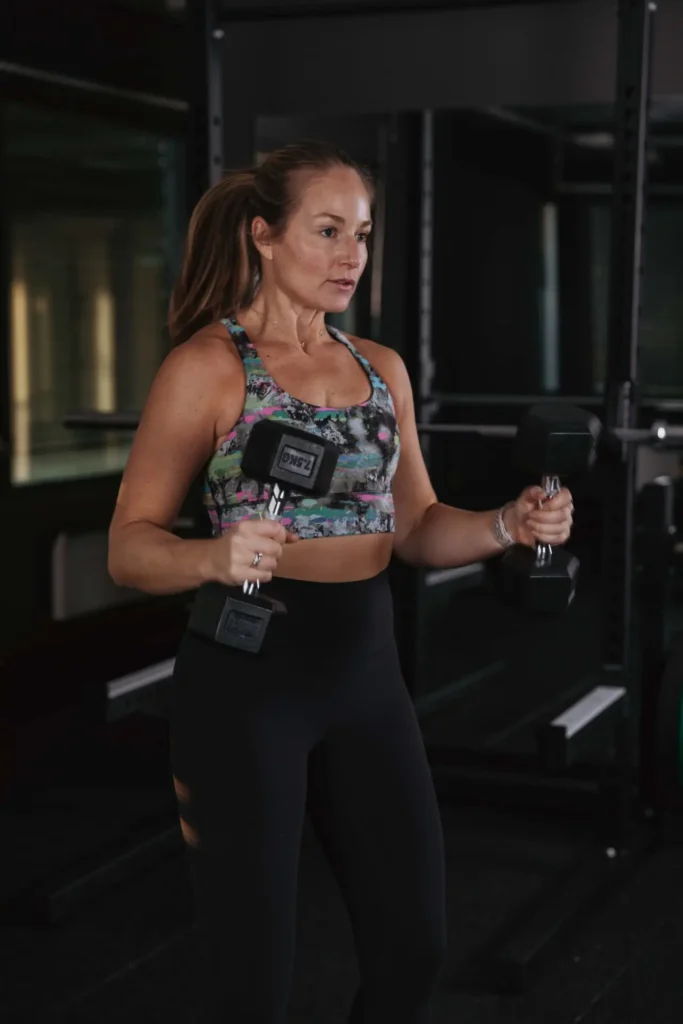

Creatine has long been associated with young men who want bigger muscles, but new research shows that this supplement can be especially valuable for women in menopause. As estrogen levels drop, women lose muscle mass faster, their skeletons become weaker, and many experience brain fog and mood swings. Creatine can counteract several of these challenges simultaneously.
This article is part of our November campaign focusing on menopause. Here you will find more articles on how to emerge stronger from this time!
Women naturally have lower creatine levels than men and consume less through their diet since they often eat less red meat. During menopause, the body’s own creatine production is further reduced due to hormonal changes. This means that supplements can be particularly useful in this phase of life. A comprehensive research review from 2025 shows that creatine combined with strength training provides significant benefits for both body and mind in women over 50.
What is creatine and how does it work?
Creatine is a natural substance that the body produces itself and that we get through food, especially red meat and fish. The substance is mainly stored in the muscles (approximately 80%) and the brain (approximately 20%), where it functions as a rapid source of energy when cells need it most. During menopause, the body’s own production decreases while the need increases.
When estrogen disappears, the entire energy system in the cells is affected. Estrogen normally supports muscle protein production and mitochondrial function – the cells’ power plant. Without enough estrogen, the muscles become less efficient at producing energy and building themselves up after exercise. Creatine compensates for this by increasing available energy in the muscle cells, which means you can train harder and build more muscle mass even with lower hormone levels.
The brain also uses an enormous amount of energy – in fact, it uses 20% of the body’s total energy consumption even though it only weighs a couple of percent of body weight. When creatine levels in the brain increase through supplements, many women report better mental clarity, less brain fog, and more stable energy throughout the day. This is particularly noticeable during periods of poor sleep or stress, which often worsen during menopause.
Documented benefits for women in menopause
Preservation of muscle mass, strength, and skeleton
After menopause, the risk of muscle loss (sarcopenia) increases significantly. Women can lose an average of 0.5–1% of muscle mass per year after the age of 50 if they do not strength train. Research shows that creatine supplementation can help counteract this loss – especially when combined with regular strength training.
A systematic review article from 2021, “Creatine Supplementation in Women’s Health: A Lifespan Perspective”, summarizes that postmenopausal women who combine creatine (3–5 g daily or ~0.3 g/kg/day for shorter periods) with strength training often experience better training response than those who only train (Smith-Ryan et al., 2021, Nutrients)
A meta-analysis from 2022 of older adults (men and women) found that creatine in combination with strength training led to significant increases in fat-free mass and strength, but that the effect was moderate and greatest in studies that lasted more than 12 weeks (Forbes et al., 2022, Front. Nutr.)
In women after menopause, several smaller studies show that creatine can increase muscle strength by 5–15% beyond the effect of strength training alone, especially in leg exercises such as squats and leg presses (Candow et al., 2021, Nutrients). The effect is likely due to creatine increasing available energy in the muscle cells (phosphocreatine stores), which makes it possible to perform more or heavier repetitions and thus stimulate muscle growth over time.
It has not been shown that creatine in itself can strengthen bone health, but indirectly it will have an effect by increasing the effect of strength training, which in turn provides greater stimuli for skeletal growth.
Cognitive function and mental energy
Creatine plays an important role in the brain’s energy system. Several studies show that supplementation increases creatine concentration in the brain and can improve cognitive performance under mental stress, especially in cases of sleep deprivation or stress (Avgerinos et al., 2018, Exp Gerontol.)
Although the data specifically on women in menopause is limited, recent reviews point out that creatine can support mental clarity, working memory, and concentration through increased energy availability in nerve tissue (Kaviani et al., 2024, Front. Aging Neurosci., PMID: 40371844)
If you are interested in this topic, it was part of the discussion on our Naardic Talk about menopause, where Annema spoke with Marianne Natvig and Niroshee Bronebakk, two doctors who focus on menopause and health during this period.
Practical use and dosage
Recommended dosage
Creatine monohydrate is the most studied and safe form of creatine. For women in menopause, 3-5 grams daily is usually recommended as a maintenance dose. This is enough to maintain elevated creatine levels in muscles and brain over time.
Some choose to start with a loading phase for faster results. This involves taking 0.3 grams per kilogram of body weight daily for 5-7 days, divided into several doses throughout the day. For a woman of 70 kg, this means approximately 20 grams daily in the loading phase. After loading, you switch to the maintenance dose. The loading phase is not necessary, but provides a faster increase in muscle creatine levels.
Creatine can be taken at any time of the day, but many prefer to take it after training with a meal that contains carbohydrates and protein. This can improve absorption. On days without training, you can take it with breakfast or another meal. Consistency is more important than timing – the most important thing is to take it every day to maintain the levels.
Combination with training
Research clearly shows that creatine has the best effect when combined with strength training. Strength training stimulates muscle building and bone renewal, while creatine provides the energy needed to train harder and recover better.
For women in menopause, strength training is recommended at least twice weekly, preferably three times. Focus on large muscle groups with exercises such as squats, deadlifts, chest presses, and rowing. Start with body weight or light weight and increase gradually. Creatine often allows you to do a couple of extra repetitions or use a little more weight, which over time gives significantly better results.
On days with HIIT or other cardio training, creatine can also be useful. It improves the ability to perform repeated high-intensity efforts and can reduce perceived exertion. This means that you can maintain a higher intensity throughout the session, which gives a better training effect.
Common questions and concerns
Many women worry about weight gain when they start with creatine. It is true that creatine can lead to a 1-2 kg increase in weight in the first few weeks, but this is water that is stored in the muscles, not fat. This fluid makes the muscles fuller and stronger, and is actually a sign that the creatine is working. The weight gain stabilizes after a few weeks.
Another common concern is the effect on the kidneys. Extensive research shows that creatine is safe for healthy kidneys at recommended doses. If you have existing kidney disease, you should consult a doctor before starting. For healthy women, there is no cause for concern with daily doses of 3-5 grams.
Some experience mild stomach discomfort in the first few days, especially with high doses in the loading phase. This can be reduced by dividing the dose throughout the day and taking creatine with food. If the discomfort persists, skip the loading phase and start directly with the maintenance dose. Also make sure to drink enough water – creatine draws water into the muscles, so the fluid requirement increases slightly.
Quality and product selection
When it comes to creatine, it is not necessary to buy the most expensive product, as long as it comes from a manufacturer you trust. Creatine monohydrate is the gold standard – it is best documented, most effective, and often cheapest. Avoid fancy variants such as creatine hydrochloride or buffered creatine that promise better absorption or fewer side effects. Research does not support these claims, and they often cost much more. As a Naardic member, you get a discount at tights.no, which sells a simple and good creatine powder. You can find the discount code under member benefits when you are logged in.
Creatine should be a white, odorless powder that dissolves relatively well in water. Avoid products with added sugar, artificial sweeteners, or other unnecessary ingredients.
Creatine is relatively cheap compared to many other supplements. A month’s consumption usually costs under 200 kroner for quality products. Given the documented benefits and the extensive research, creatine represents good value for money for women in menopause.
Expectations and timelines
Creatine is not a quick fix, but a long-term tool for better health. The first effects on training capacity are often noticeable after 1-2 weeks, especially if you use a loading phase. You may notice that you can handle a little more during training, that the last repetitions become easier, or that you recover faster between sessions.
Noticeable changes in muscle mass and strength usually take 4-8 weeks with consistent use and training. Cognitive benefits such as better mental clarity and less brain fog are often reported after 2-4 weeks, but this varies individually. Some notice improvement quickly, others need longer.
For bone health effects, you have to think long-term. The studies that show positive effects on bone density and structure follow participants for months to years. This is an investment in future health, not something you notice from week to week. Continue with creatine and strength training consistently over time for the best possible protection against osteoporosis.
Creatine as part of a holistic approach
Creatine is a powerful tool, but it works best as part of a holistic strategy for menopause. Combined with the strength training we have discussed earlier in the article series, HIIT training adapted for women over 45, and good nutrition with enough protein, creatine can amplify all these measures.
Think of creatine as an amplifier for your training. It gives you energy to train a little harder, build a little more muscle mass, and maintain mental sharpness through hormonal fluctuations. For many women in menopause, this can be the difference between just getting through the day and actually thriving in this phase of life.
Feel free to discuss creatine with your doctor, especially if you are taking medications or have health conditions. Most doctors are positive about creatine for women in menopause, given the solid research documentation. Together with hormone therapy if applicable, regular exercise, and good nutrition, creatine can be an important piece in maintaining strength, vitality, and mental clarity through menopause and beyond.
Summary
Creatine is no longer reserved for young men who want to build muscle. For women in menopause, this safe and well-documented supplement offers concrete benefits: preserved muscle mass and strength, support for skeletal health, better mental energy and cognitive function, as well as more stable mood and energy levels throughout the day.
With a simple dosage of 3-5 grams daily, best combined with regular strength training, creatine can be a valuable tool for counteracting many of the challenges of menopause. Extensive research, including long-term studies on women after menopause, confirms both safety and effectiveness.
Feel free to start carefully, be patient with the results, and remember that creatine works best as part of an active lifestyle. Together with adapted training, good nutrition, and enough rest, creatine can help you not only get through menopause, but thrive through it.